

How To Choose The Right Shop Vacs For Garages 2026
By Tom Reeves
A shop vac is the only tool in your garage that matters more than your impact wrench or torque wrench. You can skip a fancy drill press, but if you don't have reliable dust extraction, your air quality drops, your power tools clog, and your workspace becomes unusable within weeks. In 2026, the market is flooded with "smart" vacuums that add Wi-Fi for no reason and strip away motor power for $50. This guide cuts through the marketing noise. We are looking at airflow, filtration efficiency, and build quality—metrics that determine whether your vacuum cleans your shop or just moves dust around.
Quick Answer
For a standard home garage, choose a wet/dry vac with at least 5-6 gallons of capacity and a motor rated for 4.0+ HP (peak) or 1.5+ HP (running). Prioritize models with HEPA filtration if you plan on sanding wood or handling lead paint, as fine particulate is the real danger. If you are doing heavy automotive work, look for "spark-proof" motors and large wheels; if you are a woodworker, prioritize cyclonic separation to keep your filter clean longer.
Table of Contents
Our Top Picks
Affiliate disclosure: if you buy through these links, we may earn a commission at no extra cost to you.


Motor Power: HP vs. Airflow (CFM)
The biggest lie in shop vac marketing is the "Peak Horsepower" rating. Manufacturers inflate these numbers to compete on spec sheets. A 6.0 HP motor that runs for three seconds before burning out is useless. What you need to look at is Airflow (CFM) and Water Lift (Inches of H2O).
CFM (Cubic Feet per Minute) determines how fast the vacuum pulls air. High CFM is critical for picking up light, bulky debris like sawdust, wood chips, or drywall dust. If your vac has high suction but low airflow, it will suck a nail into the hose but leave the pile of sawdust untouched.
Inches of Water Lift measures the static pressure—the "grunt" of the motor. This is what allows you to pull water out of a flooded basement or lift heavy liquids like antifreeze or oil from a pan. For general garage cleanup, you want a balance: at least 90 CFM for dust and 80+ inches of water lift for wet work.
Tank Capacity and Portability
Garage floors are large. Emptying a 1-gallon canister five times while cleaning up after sanding a table saw is a recipe for frustration. However, a 30-gallon drum is immovable unless you have a dolly.
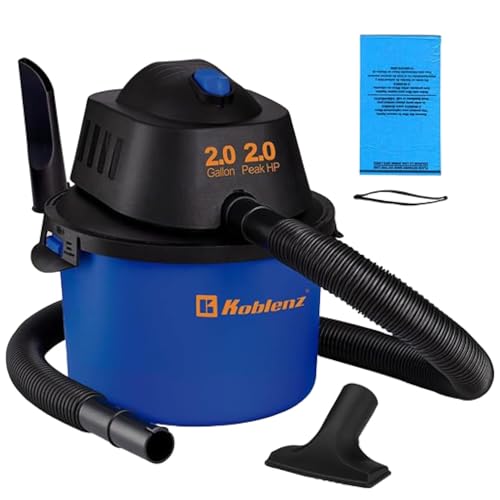
- 2-5 Gallons: Best for handheld dust extraction on miter saws or detail work in the workshop. Too small for floor cleanup.
- 6-12 Gallons (The Sweet Spot): This is the standard garage size. It holds enough debris to finish a project without overflowing, but remains light enough to carry up stairs if needed.
- 15+ Gallons: Industrial grade. Only buy this if you are running a full-time woodworking shop or auto repair bay. Ensure it has large pneumatic tires; small plastic wheels will get stuck on garage door tracks and concrete cracks.
Material matters too. Polyethylene (plastic) tanks are lighter and rust-proof but can crack in freezing temperatures if left outside. Metal drums are durable but heavy and prone to denting, which ruins the seal with the lid.
Filtration Systems Explained
This is where health risks hide. Standard paper or foam filters catch large chips but let fine silica dust and mold spores pass right through the exhaust. In a garage, you are breathing that air back out.
Cyclonic Separation: High-end vacuums use cyclonic action to spin debris into the bottom of the canister before it hits the filter. This keeps the filter clean for hours, maintaining suction power. If you do a lot of dust generation, this feature pays for itself in filter replacements.
HEPA Filtration: Mandatory if you are sanding old wood (potential lead paint) or working with drywall (silica). A true HEPA filter captures 99.97% of particles down to 0.3 microns. Without it, you are just redistributing hazardous dust into your lungs and your HVAC system.
Corded vs. Cordless: The 2026 Reality
By 2026, cordless technology has matured, but shop vacs remain a high-draw power tool. Here is the practical breakdown:
Corded Vacuums: Still the king of performance. They offer unlimited runtime and consistent suction. If your garage has outlets near your workbench or car lift, stick with corded. They are cheaper for the power you get.
Cordless Vacuums: Useful for quick cleanups in spots without power, like under a car lift or in a detached shed. However, be wary of "tool-only" kits. The battery and charger add significant cost. Ensure the vacuum is compatible with your existing 18V/20V Max or 40V platform batteries to save money.
The Hybrid Approach: Many pros keep a corded unit for heavy wet/dry work and a small cordless handheld for quick dusting of tool chests and engine bays.
Essential Features for Garage Use
Beyond the motor and tank, specific features dictate daily usability. Don't overlook these:
- Blower Function: A switch that reverses the airflow turns your vac into a leaf blower or dust-off tool. Essential for clearing sawdust off a workbench or drying off a car after washing.
- Spark-Proof Motors: If you vacuum up metal shavings, grinding dust, or automotive debris, standard carbon-brush motors can spark and ignite flammable vapors. Look for "spark-proof" or "non-sparking" ratings for safety.
- Hose Storage: You will never use the vacuum if the hose is tangled on the floor. Integrated wall mounts or built-in hose hooks are not luxuries; they are necessities for workflow.
- Quick-Release Latches: Cheap plastic clips break. Metal latches that allow you to dump debris in seconds are worth the extra cost.
Frequently Asked Questions
Can I use a regular shop vac for water?
Yes, but only if it is rated "Wet/Dry." Never use a standard household vacuum for liquids; it will short circuit the motor instantly. Ensure the float valve (if present) is working to shut off suction when the tank is full.
Do I need a HEPA filter for woodworking?
Absolutely. Wood dust, especially from hardwoods and MDF, contains fine particulates that cause respiratory issues over time. A standard bag or foam filter lets this pass. Use a HEPA filter to protect your lungs.
What size shop vac do I need for an auto garage?
For automotive work, you need high suction (water lift) to pull fluids. A 10-12 gallon tank with a spark-proof motor is ideal. Avoid small handhelds for oil or coolant; they lack the volume to handle spills efficiently.
How often should I change my shop vac bag?
If using a disposable bag, change it when suction drops noticeably or visually when it is 75% full. Clogged bags kill airflow faster than clogged filters. For wet work, you generally don't use bags.
Can I vacuum hot ashes from a wood stove?
No. Even if the ashes look cool, they can contain embers that will ignite the plastic canister or the filter bag. Wait until they are completely cold and use a dedicated metal ash vacuum if possible.
Conclusion
Choosing the right shop vac comes down to matching the tool to your primary workload. If you are building furniture, prioritize cyclonic separation and HEPA filtration. If you are fixing cars, prioritize spark-proof motors and high water lift. Buy the largest tank you can physically move, and never compromise on hose storage. A good vacuum keeps your tools running cool and your shop safe—don't treat it as an afterthought.


