

How To Choose The Right Garage Shop Stools 2026
You spend thousands on precision saws, torque wrenches, and heavy-duty workbenches. If you are dropping hours on your knees or standing with bad lumbar support while torquing head bolts, you are compromising your own health and your work quality. A shop stool isn't furniture; it is a critical piece of ergonomic equipment that dictates how long you can work comfortably and accurately before fatigue sets in.
Quick Answer
For general garage work, choose a heavy-duty hydraulic shop stool (minimum 300lb capacity) with a wide, non-slip seat for stability. If you are doing precision assembly or engine work, opt for a height-adjustable mechanic’s stool with a backrest and locking casters. Avoid cheap plastic folding stools—they wobble under load and will fail when you lean into a bolt.
Table of Contents
Our Top Picks
Affiliate disclosure: if you buy through these links, we may earn a commission at no extra cost to you.
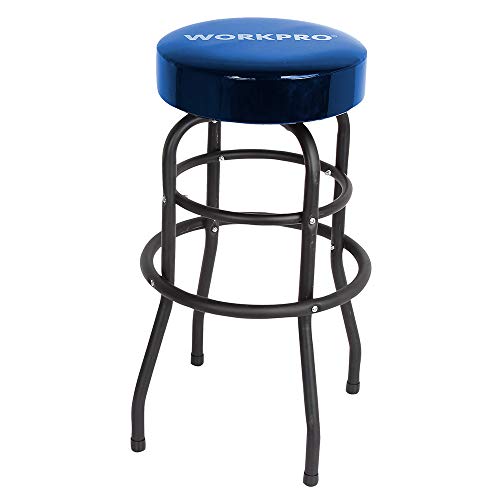

Load Capacity and Stability
The first spec to check is the weight rating. Most hardware store stools claim 300 pounds, but that number often refers to static load (sitting still). In a shop environment, you are dynamic. You shift your weight, lean forward to apply torque, and bounce slightly when standing up. If the stool’s center of gravity isn't low and wide, it will tip.
Look for a base diameter that matches the seat size. A narrow base on a wide seat creates a lever effect that can topple you if you reach too far. For automotive work where you might be wearing heavy boots or carrying tool belts, stick to stools rated for at least 350-400 pounds. Steel frames are non-negotiable; aluminum is too light and will flex under high torque loads.
Seat Material and Ergonomics
Your seat material determines how long you can work before your sit bones ache. Hard plastic seats are cold and unforgiving; they dig into your thighs and restrict blood flow during long oil changes or transmission builds. Foam-padded seats are better, but cheap foam compresses permanently within months.
Polyurethane or high-density rubberized seats offer the best balance of durability and comfort. They resist oil, grease, and solvents without degrading. If you have back issues, look for a contoured seat that supports the natural curve of your spine rather than a flat disc. For precision work like carburetor rebuilding, a slightly firmer seat helps maintain posture; for heavy lifting, cushioning is king.
Mobility: Casters vs. Glides
Your choice between fixed glides and casters depends entirely on your workflow. Fixed glides (rubber feet) provide maximum stability. They do not roll when you push down or twist your body. This is critical for tasks requiring significant downward force, like pressing bearings or using a large torque wrench.
Casters are essential if you move around the shop floor frequently. However, not all casters are created equal. You need industrial-grade polyurethane wheels with ball bearings. Cheap plastic wheels will crack under load and leave debris on your concrete floor. Ensure the stool has a locking mechanism for at least two wheels so it stays put when you are working.
Height Adjustment Mechanisms
There are three main types of adjustment, and each serves a different purpose:
- Pneumatic (Gas Lift): The most common. Smooth, easy to adjust with your body weight. Look for Class 3 or Class 4 gas cylinders for longevity. Avoid the cheap Class 1 pistons found in office chairs; they leak oil and sag within a year.
- Hydraulic (Pump-up): You pump a lever to rise and squeeze handles to lower. These are slower but often more robust for heavy-duty shop use. They rarely fail because there is no gas seal to degrade.
- Mechanical Pin/Lever: The simplest and most durable. No seals to leak, no pumps to break. However, you must stand up to change the height. These are best for fixed stations where you don't need frequent adjustments.
Durability and Maintenance
A shop stool is a tool, not decor. It will get kicked by tires, dropped on by wrenches, and exposed to chemicals. The frame should have a powder-coated or chrome-plated finish to resist rust from humidity and road salt. Welds should be smooth and continuous, not spot-welded, which can crack under vibration.
Maintenance is minimal but necessary. Keep the adjustment mechanism clean. If you have a pneumatic stool, wipe down the piston rod with a dry cloth after every use to prevent grit from scratching the seal. For hydraulic stools, check for leaks around the pump head annually. A well-built shop stool should outlast three or four power tools.
Frequently Asked Questions
Can I use an office chair in my garage?
No. Office chairs are designed for carpeted floors and smooth, light loads. The casters will sink into concrete or get stuck on debris, and the pneumatic cylinders often lack the weight rating for heavy mechanics. They also lack side support for leaning.
What is the minimum seat diameter I should get?
Aim for at least 12 inches in diameter. Smaller seats (8-10 inches) feel unstable and offer less surface area for weight distribution, leading to faster fatigue.
Do I need a backrest?
For heavy mechanical work involving torque or lifting, no. A backrest can interfere with your range of motion and get in the way of tool access. Backrests are only recommended for precision assembly tasks where you sit for hours at a bench.
How do I prevent my stool from rolling away while I work?
Always engage the wheel locks. If your stool doesn't have locks, use chocks or choose a model with fixed glides for stationary work areas.
Is a knee slider better than a standard stool?
Knee sliders are excellent for precision bench work as they allow you to shift weight to your knees, reducing lower back strain. However, they are not suitable for general garage tasks where you need to stand up quickly or apply downward force.
Investing in the right shop stool is an investment in your longevity as a builder. Don't skimp on the base stability or the piston quality. Pick a stool that matches your primary task—stability for heavy work, mobility for general garage use—and you will find yourself working longer and safer every day.


