

How To Choose The Right Cordless Shop Vacuums 2026
There is a fundamental difference between a shop vac that sucks up sawdust and one that keeps you compliant with OSHA regulations while cutting concrete. In the modern shop, cordless technology has finally matured to the point where you can move freely without tripping over extension cords, but only if you understand the engineering behind the suction. Choosing the right unit isn't about picking a brand; it is about matching airflow, filtration, and capacity to the specific hazards you generate daily. Get this wrong, and you are breathing silica or clogging your filter every ten minutes. Get it right, and you save time, protect your lungs, and keep your workspace clean.
Quick Answer
For general garage cleanup, prioritize a unit with at least 5-gallon capacity and high static lift to handle heavy debris. For silica-generating tasks like grinding concrete or cutting masonry, you must select an OSHA-compliant unit with true HEPA filtration (99.97% efficiency at 0.3 microns) and sufficient CFM to match your tool's exhaust. Always verify that the hose diameter matches your tool's port size to prevent airflow restriction and loss of suction power.
Table of Contents
Our Top Picks
Affiliate disclosure: if you buy through these links, we may earn a commission at no extra cost to you.

Filtration: The Silica Compliance Reality
Not all filters are created equal, and confusing a "HEPA-style" label with true HEPA filtration can have serious health and legal consequences. Standard shop vac filters are designed to catch large chips and sawdust, typically capturing particles 5 microns or larger. This is sufficient for woodworking, but it is dangerously inadequate for masonry work. When you cut concrete or grind stone, you generate respirable crystalline silica. OSHA’s silica standard (29 CFR 1926.1153) mandates the use of H-class or HEPA filtration for these tasks.
True HEPA filtration is defined as capturing 99.97% of particles at 0.3 microns. This is a hard engineering standard, not a marketing term. If you are working with silica, a standard shop vac is not an engineering control; it is a liability. You need a dust extractor that is explicitly rated for fine particulate matter and compliant with OSHA Table 1 requirements. This usually means a sealed system with a HEPA bag or a washable HEPA filter that prevents bypass leakage.
Airflow vs. Static Lift: Understanding the Specs
Two numbers dominate shop vac performance: CFM (Cubic Feet per Minute) and inches of water lift (static pressure). Many buyers focus solely on suction power, but for tool extraction, airflow is king. Most handheld grinders and sanders require an airflow rate between 35–55 CFM at the tool port to effectively capture dust at the source. If your vacuum cannot move that volume of air, the dust will settle before it reaches the hose.
Static lift, on the other hand, determines how well the vacuum can pull air through resistance, such as a clogged filter or a long, narrow hose. A high static lift is crucial for picking up heavy debris like metal shavings or wet sawdust from a workbench. However, high static lift without adequate CFM results in a vacuum that sounds powerful but fails to keep up with the dust generation of a high-speed grinder. You need a balance: enough CFM to capture the dust cloud, and enough lift to pull it through the system.
Capacity and Run-Time Management
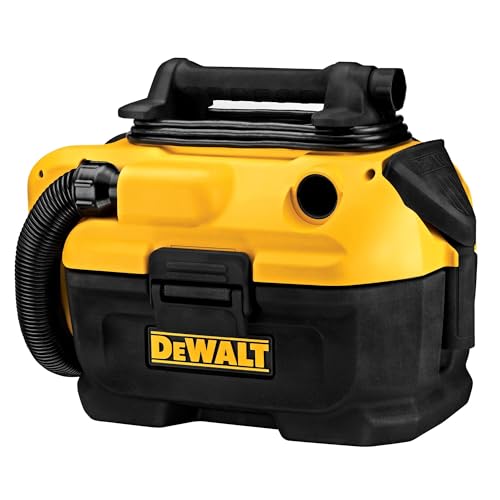
Cordless shop vacs have matured significantly, with platforms like Milwaukee M18 FUEL and EGO 56V offering capacities that rival traditional corded units. However, capacity dictates how often you stop to empty the canister. A 1/2 gallon unit, like the DeWalt DCV517B, is excellent for dedicated dust extraction on small tools but will fill up instantly during general garage cleanup. For broader tasks, you need at least a 5-gallon capacity to handle the volume of debris generated by typical projects.
The largest tested cordless models, such as the EGO CV0905, offer 9-gallon capacities, which is a game-changer for large-scale demolition or extensive woodworking. But capacity is only half the equation; you must also consider the battery platform. If you are already invested in a specific ecosystem, like the Milwaukee M18 system, the 0970-20 model offers 6-gallon capacity and OSHA Table 1 compliance for drywall sanding, connecting directly to any compatible tool for on-tool extraction. This integration reduces hose clutter and improves capture efficiency.
Hose Length and Connection Geometry
The length of your hose directly impacts performance. Standard hose diameters are 1-7/8 inches for larger tools and 1-1/4 inches for handheld tools. While a longer hose offers more reach, it introduces friction losses that reduce CFM at the tool port. A standard 6–8 foot hose may impact suction performance compared to a shorter connection, especially if the hose is kinked or coiled tightly. For precise tool extraction, shorter, stiffer hoses are often superior because they maintain higher air velocity at the intake.
Ensure the hose diameter matches your tool’s port size. Using an adapter to connect a 1-1/4 inch hose to a 1-7/8 inch tool port creates a bottleneck, drastically reducing airflow. Conversely, a hose that is too large for the tool port can reduce air velocity, making it harder to lift dust into the stream. Always use the correct diameter hose for the tool you are extracting from, and keep the hose as straight as possible to minimize friction.
Build Quality and Ergonomics
A shop vac is a tool that takes a beating. It gets dropped, dragged across concrete, and exposed to moisture and chemicals. The canister material matters: plastic can crack under impact, while metal can dent and corrode. Look for units with robust handles and integrated storage for accessories. Ergonomics are also critical; a vacuum that is difficult to maneuver or empty will sit unused. Features like a low center of gravity, wide wheels, and a quick-release canister lid make a significant difference in daily usability.
Consider the noise level as well. A loud vacuum discourages use, leading to dust accumulation. While cordless units are generally quieter than their corded counterparts, the difference is noticeable. A quieter vacuum encourages you to use it consistently, keeping your workspace cleaner and safer. Finally, check the warranty and serviceability. A unit that is easy to clean and maintain will last for years, providing long-term value and consistent performance.
Frequently Asked Questions
Can I use a standard shop vac for cutting concrete?
No. Standard shop vacs do not have HEPA filtration and cannot capture respirable silica particles. You must use an OSHA-compliant dust extractor with true HEPA filtration to comply with safety regulations and protect your health.
What is the difference between CFM and Static Lift?
CFM (Cubic Feet per Minute) measures the volume of air moved, which is critical for capturing dust at the source. Static Lift measures the vacuum's ability to pull air through resistance, such as clogged filters or heavy debris. Both are important, but CFM is key for tool extraction.
Do cordless shop vacs have enough power for heavy debris?
Yes, modern cordless units from brands like Milwaukee and EGO offer suction and capacity that rival corded models. However, for very heavy debris like wet sawdust or large metal shavings, ensure the unit has high static lift and a large canister capacity.
How often should I replace or clean the HEPA filter?
Washable HEPA filters should be cleaned according to the manufacturer's instructions, usually every few months or when suction drops. Disposable HEPA bags should be replaced when full. Never use a HEPA filter that is damaged or compromised, as this voids its filtration efficiency.
Is a longer hose always better for reach?
No. Longer hoses increase friction loss, which reduces CFM at the tool port. For optimal dust capture, use the shortest hose possible that still allows you to reach the work area. Keep the hose straight and avoid kinks to maintain airflow.
What capacity shop vac do I need for general garage use?
For general garage cleanup, a 5-gallon capacity is a good balance of portability and volume. If you do large-scale projects or demolition, consider a 9-gallon unit like the EGO CV0905 to reduce the frequency of emptying.
Choosing the right cordless shop vac is an investment in your shop's efficiency and your long-term health. By prioritizing true HEPA filtration for silica tasks, understanding the balance between CFM and static lift, and selecting a unit with the right capacity and build quality, you ensure that your vacuum is a reliable partner in your work. Start by identifying your primary use case—whether it's fine dust extraction or heavy debris cleanup—and match the specs to that need. Your lungs and your workflow will thank you.


