

How To Choose The Right Garage Socket Organizers 2026
There is nothing worse than dropping a 3/8-drive socket into the abyss between your workbench and the concrete floor. Or worse, spending twenty minutes hunting for that one elusive 14mm deep-well socket while your customer watches the clock tick. A disorganized tool chest isn't just an aesthetic failure; it's a productivity killer and a safety hazard. When you are wrenching on suspension components or rebuilding an engine, muscle memory is your best friend. If your sockets are tangled in a mesh bag or scattered across a pegboard, you lose that rhythm. Choosing the right organizer isn't about looking tidy—it is about reducing downtime and protecting expensive chrome from corrosion.
Quick Answer
Match your storage system to your drive size and frequency of use: use rigid plastic or metal trays for high-frequency metric and SAE sets, and hangable pegboard hooks for low-profile ratchets and extensions. Avoid cheap mesh bags that degrade over time; invest in molded cases with individual slots to prevent cross-threading and damage. For heavy automotive work, prioritize depth and durability over portability.
Table of Contents
Our Top Picks
Affiliate disclosure: if you buy through these links, we may earn a commission at no extra cost to you.

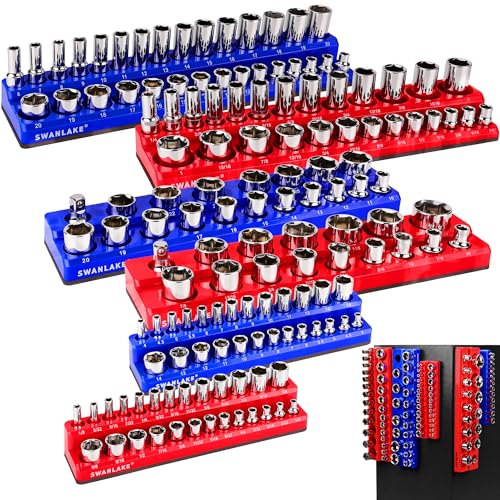
Assess Your Drive Sizes and Frequency
The first step is auditing what you actually use. Most home mechanics hoard tools they will never touch. If you are building a garage organization system, start by separating your 1/4-inch, 3/8-inch, 1/2-inch, and 3/4-inch drives. The 3/8-inch drive is the workhorse for general automotive repair—engine work, suspension, and interior panels. It needs the most accessible storage.
The 1/2-inch drive belongs in a heavy-duty tray or a dedicated drawer insert because those sockets are large, heavy, and used for lug nuts and high-torque applications. The 1/4-inch drive is for precision work—electronics, small engine parts, and delicate fasteners. Keep these separate to prevent the larger drives from crushing the smaller ones.
Material Matters: Plastic vs. Metal
Not all organizers are created equal. Cheap, thin plastic trays crack under the weight of a full 1/2-inch drive set or when dropped from a workbench height. Look for high-density polypropylene or ABS plastic with reinforced ribs on the bottom. These materials offer impact resistance and won't rust if you store them in a damp garage.
Metal organizers, typically made of stamped steel or aluminum, are durable but have downsides. Steel can rust if the coating chips, and metal-on-metal contact can damage the chrome plating on your sockets over time. Aluminum is lighter and rust-proof but more expensive. For most shop environments, high-quality molded plastic offers the best balance of protection, weight, and cost.
The Pegboard vs. Tray Debate
Your storage choice depends on your workspace layout. Pegboards are excellent for hanging ratchets, extensions, and universal joints because they keep these long tools off the bench and visible. However, pegboards are terrible for storing individual sockets. Sockets will fall out of standard hooks unless you use specific socket hangers with retaining clips.
Trays and drawer inserts are superior for storing the sockets themselves. They keep small parts contained and prevent them from rolling away. If you have a tool chest, drawer dividers are the gold standard. They allow you to slide the entire set out at once, giving you full visibility of your inventory without digging through layers.
Protecting Your Investment
Premium sockets from brands like Snap-on, Mac, or even high-end aftermarket lines are expensive. Storing them loosely in a box or bag allows them to bang against each other, chipping the chrome and damaging the drive square. Look for organizers with individual, snug-fitting slots. These molded cavities hold each socket securely, preventing movement during transport or when the drawer is slammed.
Additionally, consider the lid of your organizer. A hard, snap-locking lid protects your tools from dust, oil mist, and moisture. Dust accumulation in the drive square can lead to premature wear on your ratchet pins. A sealed environment keeps your tools ready for precision work every time you open them.
Accessibility and Ergonomics
If you are storing sockets in a heavy-duty case, weight is a factor. A full 1/2-inch drive set can weigh over 30 pounds. Ensure the organizer has a comfortable, ergonomic handle that doesn't dig into your palm when lifted. Some high-end cases feature dual handles or even wheels for moving large sets across the shop floor.
Consider the depth of the tray. Deep-well sockets are common in automotive work. If your organizer has shallow slots, you will have to remove the socket from its slot to use it, defeating the purpose of organized storage. Ensure the slots are deep enough to accommodate both standard and deep-well sockets without forcing them in.
Frequently Asked Questions
Can I store metric and SAE sockets together?
It is not recommended. Mixing sizes leads to using the wrong tool, which can round off bolt heads. Use separate trays or clearly labeled dividers to keep them distinct.
What is the best way to store ratchets?
Ratchets should be hung on a pegboard or stored in a dedicated drawer with a foam cutout. Hanging them keeps the handle accessible and prevents the gear mechanism from being damaged by other tools.
Should I use magnetic strips for sockets?
No. Magnetic strips can interfere with the temper of high-quality steel tools over time and may not hold deep-well sockets securely. Use molded slots instead.
How do I prevent rust in my socket organizer?
Keep the organizer in a dry environment. If you live in a humid climate, apply a light coat of gun oil or WD-40 to the sockets before storing them in a sealed case.
Are plastic organizers worth it over cardboard boxes?
Absolutely. Cardboard offers no protection against impact, moisture, or crushing. Plastic trays protect your investment and keep tools organized for decades.
Choosing the right garage socket organizer is a decision that pays dividends every time you open your toolbox. By matching the storage solution to your drive sizes, prioritizing durable materials, and ensuring easy access, you streamline your workflow and protect your tools. Stop wrestling with tangled cables and falling sockets. Invest in a system that keeps your workspace efficient and your hands free for the job at hand.
🛒 Relevant Products for This Topic
Affiliate disclosure: if you buy through these links, we may earn a commission at no extra cost to you.
Magnetic Socket Organizer Set, 6-piece 1/4", 3/8", 1/2" SAE & Metric Sockets...
$32.99
View Product Details →Magnetic Socket Organizer Set, 6PCS Socket Holder, 1/4", 3/8", 1/2" Sockets...
$29.99
View Product Details →
SWANLAKE Socket Organizer Set 18-Piece, 1/4-Inch x 96 Clips, 3/8-Inch x 90...
$29.99
View Product Details →

