

Which Air Compressor Is Right For Your Garage Quiz
Undersized and you'll wait for the tank to refill mid-job. Oversized and you've spent $800 on a shop compressor you didn't need. Answer 5 questions and get the right size and type for exactly what you do in your garage.
For nailers, tire inflation, and light intermittent use, a pancake or hot dog compressor is all you need. Compact, portable, quick to fill, and easy to store. These are the most-owned compressors in America for a reason — they handle 80% of home and DIY workshop tasks without taking up a corner of your garage.
Table of Contents
- Our Top Picks
- What do you mainly use compressed air for?
- Do you need to move the compressor around, or does it stay put?
- How important is noise level?
- Do you have 240V outlet access in your garage?
- What's your budget?
- 🥞 Best Match: Pancake or Hot Dog Compressor
- ⚙️ Best Match: Twin-Stack or Larger Portable Compressor
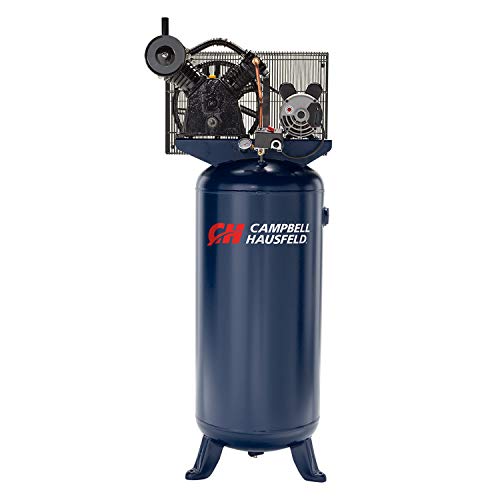
- 🏭 Best Match: Stationary Shop Compressor (60–80 Gallon)
- Frequently Asked Questions
Our Top Picks
Affiliate disclosure: if you buy through these links, we may earn a commission at no extra cost to you.

What do you mainly use compressed air for?
Do you need to move the compressor around, or does it stay put?
How important is noise level?
Do you have 240V outlet access in your garage?
What's your budget?
🥞 Best Match: Pancake or Hot Dog Compressor
Best Pick: CRAFTSMAN CMEC6150K or BOSTITCH BTFP02012
The CRAFTSMAN CMEC6150K ($109) is the best-selling pancake compressor at this price — 6-gallon tank, 150 PSI max, 2.6 SCFM at 90 PSI, oil-free pump (no maintenance). Comes with a 25-ft coiled hose and inflation kit. The BOSTITCH BTFP02012 ($129) has a slightly larger pump with better SCFM recovery — preferred for nailers that cycle quickly. Both are excellent entry compressors.
Shop Craftsman Pancake Compressor →Step Up: California Air Tools 8010 (Ultra-Quiet)
The California Air Tools 8010 ($199) runs at 60 dB — about the noise level of a normal conversation. For attached garages or early-morning work, this is transformative. 8-gallon tank, oil-free, 1 HP motor. Costs more but you'll thank yourself the first time you use a nailer at 7 AM without waking anyone up.
Shop California Air Tools Ultra-Quiet →⚙️ Best Match: Twin-Stack or Larger Portable Compressor
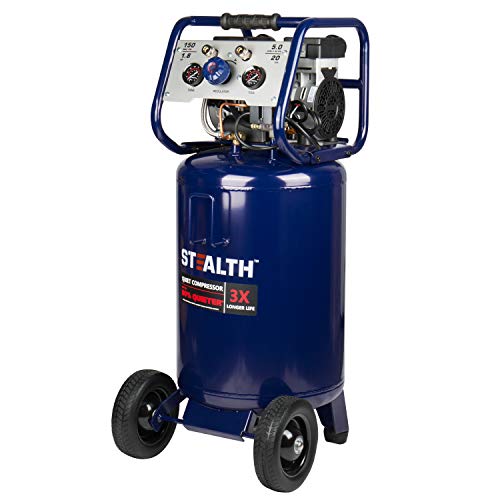
For impact wrenches, die grinders, and automotive air tools that demand higher CFM (cubic feet per minute), a single 6-gallon pancake runs out of air too fast. A twin-stack or 20-gallon portable gives you the tank volume and pump recovery rate to run air tools continuously without waiting.
Best Pick: DEWALT DXCMLA1983054 20-Gallon or Makita MAC5200
The DEWALT 20-gallon portable ($249) delivers 5.0 SCFM at 90 PSI — enough to run an impact wrench continuously. 200 PSI max, twin-cylinder pump, oil-lubricated for longevity. The Makita MAC5200 ($359) is the premium choice — cast iron pump, 3.3 HP, 5.2 SCFM, and one of the quietest big-tank portables at 79 dB. Excellent for serious automotive work.
Shop DEWALT 20-Gallon Compressor →What CFM You Actually Need by Tool
Impact wrench (½"): 4–5 SCFM at 90 PSI
Die grinder: 4–6 SCFM at 90 PSI
Air ratchet: 3–4 SCFM at 90 PSI
Framing nailer: 2.2 SCFM at 90 PSI (intermittent use — even small tanks work)
Spray gun (HVLP): 6–12 SCFM at 40 PSI — requires a larger compressor
Always buy a compressor rated at 1.5x your tool's CFM requirement for headroom.
🏭 Best Match: Stationary Shop Compressor (60–80 Gallon)
For spray painting, running multiple air tools simultaneously, or high-volume shop use, a stationary upright or horizontal tank compressor is the right tool. Once it's in your shop and plumbed, you never think about air again — just open a valve and work.
Best Pick: Ingersoll Rand SS3F2GK or DEWALT DXCMV5048055
The Ingersoll Rand SS3F2GK ($699) is a 60-gallon, 3 HP, 230V compressor with a cast iron single-stage pump — built to last decades in a production environment. The DEWALT DXCMV5048055 ($649) is a 50-gallon vertical with a 4.7 SCFM output — slightly less tank, but strong pump. Both require a 230V/20A outlet. These are the serious shop compressors.
Shop Ingersoll Rand Shop Compressor →Spray Painting Specifically: Get a Dedicated HVLP Setup
Automotive spray painting requires 6–12+ SCFM at 40–90 PSI. A dedicated HVLP turbine sprayer (like the Fuji Semi-PRO 2 at $489) bypasses the compressor entirely — turbine-driven HVLP atomizes paint without a big compressor. For cabinet finishing or automotive work without a full shop setup, an HVLP turbine is often the smarter choice than buying a massive compressor.
Shop HVLP Turbine Spray Systems →GarageBench.com participates in the Amazon Associates program and earns commissions on qualifying purchases at no extra cost to you.
Frequently Asked Questions
How do I choose the right size air compressor for my garage?
The right size depends on your primary use: nailers and tire inflation need 2-6 CFM, while sanders and spray guns require 10-15+ CFM. Start by identifying your most demanding tool, then add 25% capacity as a buffer to avoid waiting for the tank to refill mid-job.
What is the best air compressor for a home garage?
A portable 6-8 gallon tank is ideal for most home garages if you primarily use nailers and inflate tires, while a stationary 20-30 gallon compressor suits DIYers who use multiple pneumatic tools regularly. Consider your available space, budget, and power outlet access when deciding between portability and tank capacity.
Is it worth buying a 240V air compressor instead of 120V?
Yes, if you have a 240V outlet available—these compressors build pressure faster, run cooler, and handle demanding tools better. However, 120V models are more convenient if you don't have dedicated 240V access, though they're better suited for light-duty applications like tire inflation and brad nailers.
How do I reduce noise from my garage air compressor?
Look for compressors rated under 75 decibels, or choose a rotary screw model instead of reciprocating, as they run quieter during continuous use. You can also place the compressor on a rubber mat away from your work area and consider adding sound dampening around the unit.
Should I get a portable or stationary air compressor for my garage?
Choose a portable compressor (2-6 gallons) if you move between jobs or have limited space, while a stationary compressor (20+ gallons) is better if your workshop stays in one place and you use air tools regularly. Stationary units are more cost-effective long-term but require dedicated floor space and won't move between jobs.
What compressed air tools can I use in a small garage?
Small garages work well with low-CFM tools like brad nailers, finish nailers, air ratchets, and tire inflators, which all run on 2-6 CFM compressors. Avoid high-demand tools like spray guns and air sanders unless you invest in a larger stationary compressor, as they'll cause frequent tank refills.
How do I know if my air compressor is undersized for my needs?
Signs of an undersized compressor include frequent tank refills during projects, the motor running constantly, and reduced tool power or speed. If you notice these issues, upgrade to the next tank size or CFM rating to match your actual usage demands.


