

Best Extension Cords And Power Strips For Workshops
🏆 Top Picks at a Glance
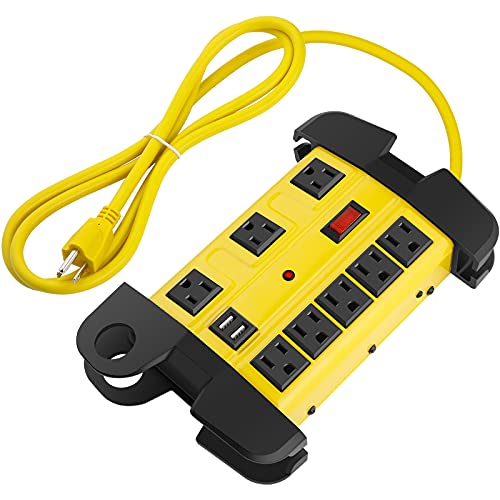 #1
#1
Best Overall
Heavy Duty Power Strip with USB, Workshop 8 Outlet Surge Protector 2700 Joules, Industrial Metal 15Amp Power Strip, 6FT Extension Cord and Wide Spaced. Yellow
$24.99
Check Price → #2
#2
Runner Up
8 Outlet Metal Heavy Duty Long Power Strip, 2100J Surge Protector with 6 FT Extension Cord, Wide Spaced and Wall Mount Powerstrip for Home, Industrial, Workshop & Garage (6FT)
$23.99
Check Price → #3
#3
Best Value
Heavy Duty 6 Outlet Metal Long Power Strip, 2700J Surge Protector with 15A Circuit Breaker, 6FT Extension Cord, Wall Mount for Garage, Workshop & Industrial Use, Wide Spaced (6ft)
$22.99
Check Price →Our Top Picks
Affiliate disclosure: if you buy through these links, we may earn a commission at no extra cost to you.
Factors to Consider
Match amp rating and wire gauge to the tool
⚡ Quick Answer
Don't guess — size the cord to the load. For intermittent handheld tools a 14 AWG cord is OK for up to 15 A, but for continuous heavy use or 20 A tools step up to 12 AWG; compressors and welders often need 10 AWG or hard wiring. Keep the continuous-load rule in mind: sustained draws should be no more than about 80% of the circuit rating to avoid overheating and nuisance trips.
Table of Contents
Length, voltage drop, and placement
Long cords hide problems. Every extra foot increases voltage drop and cuts motor torque; keep high-draw extensions under 25 feet when possible, or bump up the gauge if you must run farther. Plan receptacle placement — moving a wall outlet costs less than replacing burned brushes or damaged electronics from low voltage.
Outlet types, GFCI and surge protection
Pick the right NEMA configuration for the tool — standard 5-15/5-20 for most hand tools, 6-15/6-20 or L-style/twist-locks for 240 V and compressors. Use GFCI-protected cords or outlets in damp garages and on outdoor projects; it’s a safety requirement where water is present. Surge protectors help protect chargers and electronics but won’t save a motor from under-voltage or current spikes.
Build quality, strain relief and jacket material
Look for molded plugs, robust strain relief, and heavy thermoplastic or rubber jackets that resist oil, solvent, and abrasion. Metal-bodied strips and industrial-grade receptacles survive drops and workshop dust better than cheap plastic. Pay attention to plug ergonomics — right-angle, 90-degree plugs keep cords flat against walls and reduce stress on outlets.
Power strips, spacing, and breaker features
For bench work choose strips with spaced outlets to fit bulky chargers and plug-in tools without blocking adjacent sockets. Integrated circuit breakers or individual switches add convenience and protection; avoid strips with low amp ratings or flimsy housings. If you rely on multiple high-draw tools, use separate circuits or a dedicated heavy-duty strip with a manual reset breaker to prevent tripping and heat build-up.
Frequently Asked Questions
Can I run a table saw or planer on an extension cord?
Short answer: avoid it if possible. High-power stationary tools should be on a properly sized circuit or short, heavy-gauge cable (10–12 AWG) because voltage drop robs motor torque and risks overheating. If you must use an extension, keep it very short and match the cord's amp rating to the tool.
What gauge extension cord do I need for my air compressor?
Match the compressor’s starting (inrush) and running amps. Small compressors often do fine with 12 AWG, but larger units with high startup current usually need 10 AWG or direct 240 V wiring. Check the nameplate amps and size the cord for the starting load and length of run.
Are power strips safe for workshop tools?
Power strips are fine for chargers, lights, and small bench tools but not for continuous high-current motors. Most strips are rated for 15 A and lack the heat dissipation and strain relief needed for heavy duty tools. Use industrial-grade strips or dedicated circuits for sustained high loads.
Do I need a GFCI for my garage or outdoor workbench?
Yes — GFCI protection is strongly recommended (and often code-required) for garages, exterior outlets, and damp areas. GFCIs protect you from ground faults when water, metal, and electricity mix. Portable GFCI extension cords give protection where the outlet doesn’t.
What’s the difference between a surge protector and a power strip?
A surge protector includes components to shunt transient voltage spikes away from connected devices; a basic power strip just distributes outlets. Surge protection helps sensitive electronics, but it won’t fix low-voltage conditions or handle motor inrushes. For tools, prioritize amp capacity and build quality first, then add surge protection for chargers and diagnostic gear.
How long can an extension cord be before it affects performance?
There’s no single cutoff, but voltage drop increases with length. For high-draw tools keep runs under ~25 feet; if you need more distance, increase the wire gauge to compensate (e.g., use 12 AWG for longer 20 A runs, 10 AWG for very long or heavy loads). Measure voltage under load if you're unsure — a few volts lost at idle can be a big problem at startup.
How should I store and care for workshop cords?
Store cords coiled loosely on reels or hooks to avoid kinks and heat build-up; never wrap tightly around the tool’s body which stresses conductors at the plug. Inspect plugs, strain reliefs, and jackets regularly for cracks, exposed wires, or melted spots, and replace cords immediately if damaged — repairs are cheap, failures are dangerous.
Conclusion
In a workshop the right cord or strip is a safety and performance decision, not a convenience. Match gauge and length to the tool, choose industrial-grade builds and GFCI where needed, and put heavy loads on dedicated circuits to get reliable torque and long service life. If you only buy one upgrade: a short, heavy-gauge (12–10 AWG) extension or a properly rated hardwired strip will deliver the biggest real-world benefit.


